
GCSE Revision Tips: Study Techniques That Actually Work
A top-achieving student answers the questions every GCSE student asks, from mocks and revision timelines to managing exam stress.
July 28, 2023 · By Arushi Dubey
If you're reading this, chances are you're an upcoming GCSE student, or you have your GCSE exams coming up soon. The examination process can be nerve-wracking and can foster anxiety in a number of students, whether you're sitting GCSEs in the UK or IGCSEs at a school in Dubai. However, it's important to face these exams with a cool head and maintain your composure. Below, I answer the most commonly asked questions about GCSE examinations and share the tips that helped me most.
How Important Are GCSE Mocks?
If you're between the ages of 15 and 16, the likelihood of hearing the phrase "It doesn't matter, they're just mocks" is incredibly high. But I'm here to tell you that mocks do matter, and in fact they are a huge part of your revision process. They not only give you a relatively clear idea of how you'd perform in your actual GCSE exam, but also allow you to highlight your weaknesses and identify topics you can improve on, whether you work through them on your own or with an IGCSE tutor.
Many schools run a few sets of mocks in the months before GCSE exams, which is why they typically encourage students to begin their revision early rather than waiting until a few weeks before. Having two or three sets of mocks throughout Year 10 and Year 11 gives you the opportunity to relearn certain concepts several times, ensuring that any difficult ideas end up in your long-term memory.
By putting in the effort to revise for mocks, you'll find that with a couple of months left before your exams you can quickly recall a large number of concepts. That gives you more time to go over the topics you struggle with, and most importantly, it takes a huge workload off your back. Treat mocks like your actual GCSEs and your future self will inevitably thank you!
When Should I Start Revising for My GCSEs?
Contrary to popular belief, revising for eight hours per day starting a year in advance isn't necessary. As a Year 12 student who achieved grades consisting solely of 8s and 9s, I found that starting your revision in December or January is ideal. This gives you six months to cover all your content, and it means you only need to revise for two to three hours per day.
It's important to start early so you're never in a situation where you're under a tremendous amount of pressure a month before your exams because of inefficient revision. On top of that, most students are still learning new content throughout Year 11, and revising new material alongside content learned in Year 10 can prove strenuous. By finishing previously learned content early, you leave yourself time to go over unfamiliar concepts and strengthen your understanding of them.
How Should I Revise?
Every student has a revision tactic that works for them. Just because a technique works for a group of students doesn't mean it will work for you. The best way to understand how to revise is to experiment: try different methods of studying and see which helps you stay focused and retain the most knowledge. That being said, here are a few study methods that have helped me revise most effectively.
The Pomodoro Technique
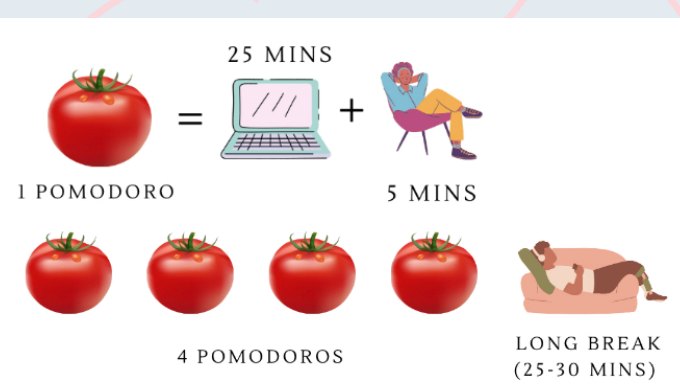
The Pomodoro technique is an incredibly helpful time management method, proven to increase productivity. Instead of studying for hours on end, choose a specific topic and revise it in short segments.
- Choose a specific task or chapter you'd like to complete.
- Work on it for 25 minutes.
- Take a 5-minute break.
- Repeat the cycle (one cycle = one Pomodoro).
- After four Pomodoros, take a 25 to 30 minute break.
Blurting
Blurting is a form of active recall. It helps you move important information from your short-term memory into your long-term memory, which is crucial for exam preparation.
- Go through material containing revision content for your upcoming exam (textbooks, old notes and so on).
- Put your textbook away, then write down any information you can remember in bullet points, including things you already know.
- Set your notes and your textbook side by side and compare them. This gives you a clearer idea of your strengths (areas you're confident in) and your weaknesses (areas that need more study time).
Flashcards
A flashcard is a double-sided card with a question on one side and the answer on the other. This lets you connect with the information through something known as confidence-based repetition: revisiting any information you were struggling to retain or understand, which is easily doable with flashcards. Numerous flashcard sets are available online, but making them yourself is not only easy to do, it also gives you the opportunity to personalise them or focus specifically on a topic you're struggling with.
- Read through your notes or textbook chapter.
- Read through it again, but this time make note of key words and their definitions.
- Fill out both sides of your flashcard: one with the keyword, the other with the definition.
Colour Coding Your Notes
Highlighting your notes with bright colours such as yellow or green can help them stick in your memory, and it can act as a stimulant for students who prefer visual learning. By using colours interchangeably while following a specific colour scheme, you're more likely to remember important information and recall it afterwards. Here's a base colour scheme you can customise to your liking:
- Important keywords and definitions: red
- Exam-relevant material: yellow
- General information and diagrams: green
Go Through Past Papers
Once you're confident in your knowledge and feel you've revised enough, past papers are a great way to put your skills to work. Not only do they give you an idea of how questions are formatted in a real exam, but going through the mark schemes helps you understand how to phrase your answers properly. By doing a past paper in exam conditions (a specific time limit, no distractions or extra help) you enhance your time management skills and become familiar with any gaps in your knowledge. Past papers for a wide variety of curriculums and topics are available online. All you have to do is search for them! And if you keep losing marks without understanding why, going through a paper with a tutor who knows the mark scheme can save you a lot of second-guessing.
How Should I Deal With Exam Stress and Anxiety?
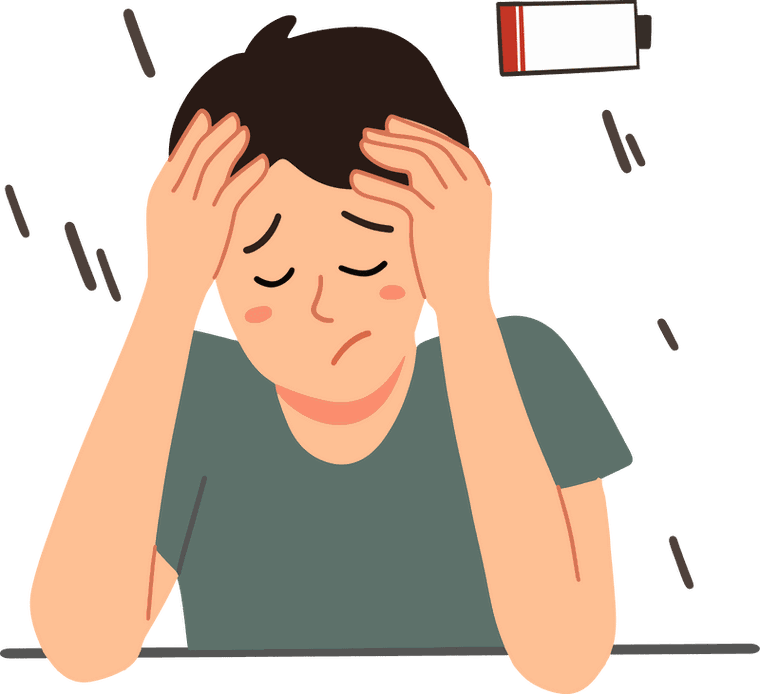
Feeling panicked before an exam is a common hardship students face, and as much as we'd like to never feel anxious again, it's unavoidable. So instead of fighting it, it's important to learn ways to work through it. Here are three ways to work through exam anxiety:
-
Practise breathing techniques. Maintaining your composure by practising mindfulness and deep breathing can immensely help lower your anxiety.
-
Be prepared. If you feel content that you've studied well, you're likely to feel confident walking into the test.
-
Get a good night's sleep. Pulling an all-nighter to study is the worst thing you can do as a student. A lack of sleep can actually exacerbate your nerves.
The Takeaway
Lastly, staying self-assured and not neglecting your revision is likely to lead to good end results. Start early, treat your mocks seriously, experiment until you find the techniques that work for you, and look after yourself along the way. And if you'd like extra support with any of it, you can always request a tutor who has been through these exams themselves. Good luck with your exams!
Arushi Dubey
Student contributor at Unitors. Achieved grades 8 and 9 across all her GCSE subjects.
Want expert GCSE support?
Our tutors know every topic, mark scheme, and revision technique. Get matched within 24 hours.